Agentic Development — The Future of Software Engineering

What Is Agentic Development?
The term “Agentic Development” has been floating around the tech scene for a while, but I notice that many people understand something different by it. So I want to start with a clear definition of how I use the term.
Agentic Development describes an approach to software development where AI agents do not just suggest code but autonomously take over entire tasks. They scaffold projects, write code, create tests, debug errors, deploy applications. The human developer shifts from writer to architect and reviewer.
This is a fundamental difference from what we previously knew as “AI-assisted development.” Tools like GitHub Copilot or the first generation of AI coding assistants were essentially intelligent autocomplete. They wrote the next paragraph, but the human was dictating. Agentic Development inverts this relationship: the human sets the direction, and the agent works independently.
From Copilot to Pilot
The evolution of AI in software development can be divided into three phases.
The first phase was autocomplete. Tools like IntelliSense, TabNine, and early Copilot versions predicted the next token or the next line. Useful, but essentially a souped-up search engine.
The second phase was copilot mode. Here, AI suggested entire functions, classes, or files based on comments or existing code. This was a quantum leap in productivity, but the human remained in the driver’s seat. Every line was accepted, modified, or rejected by the developer.
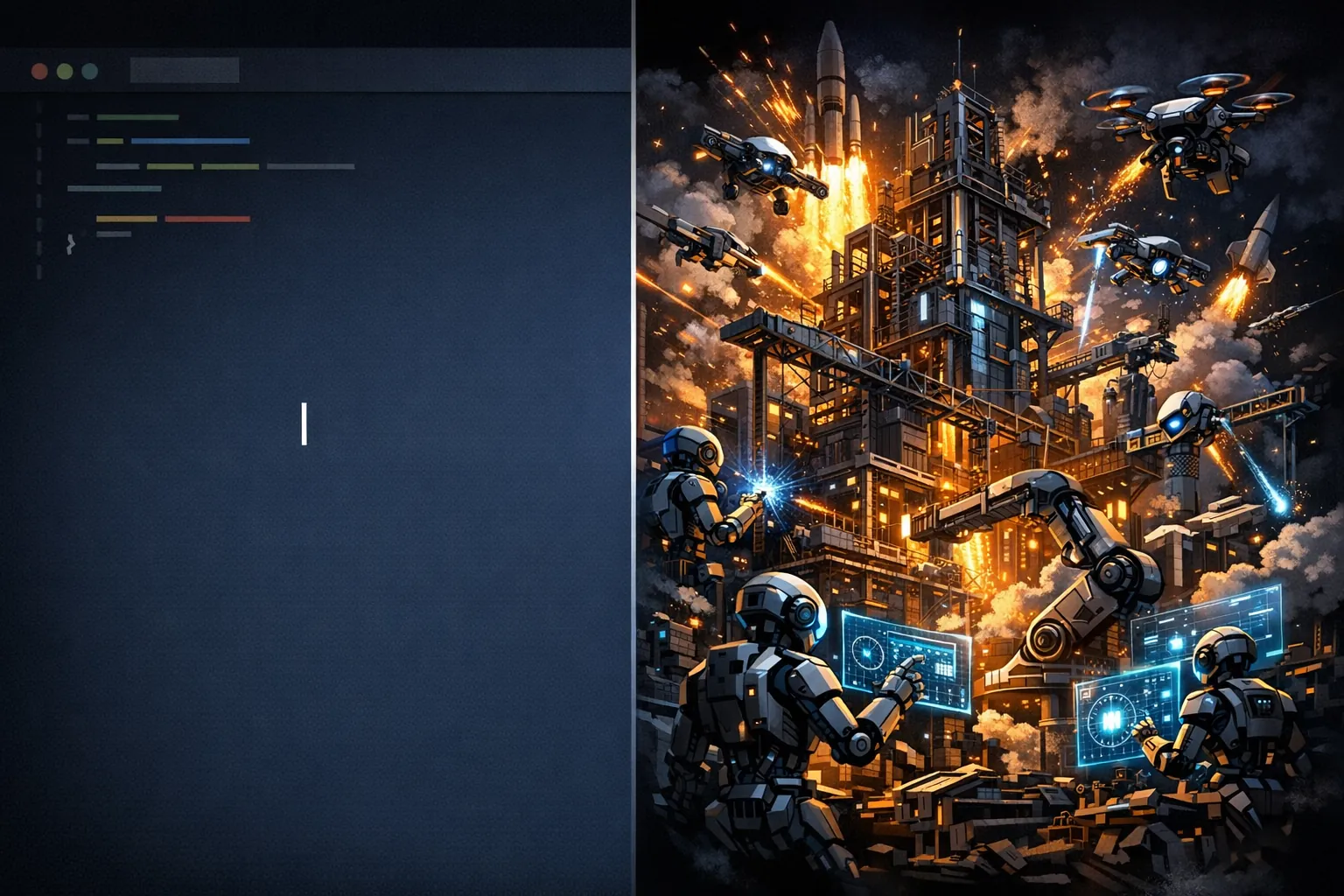
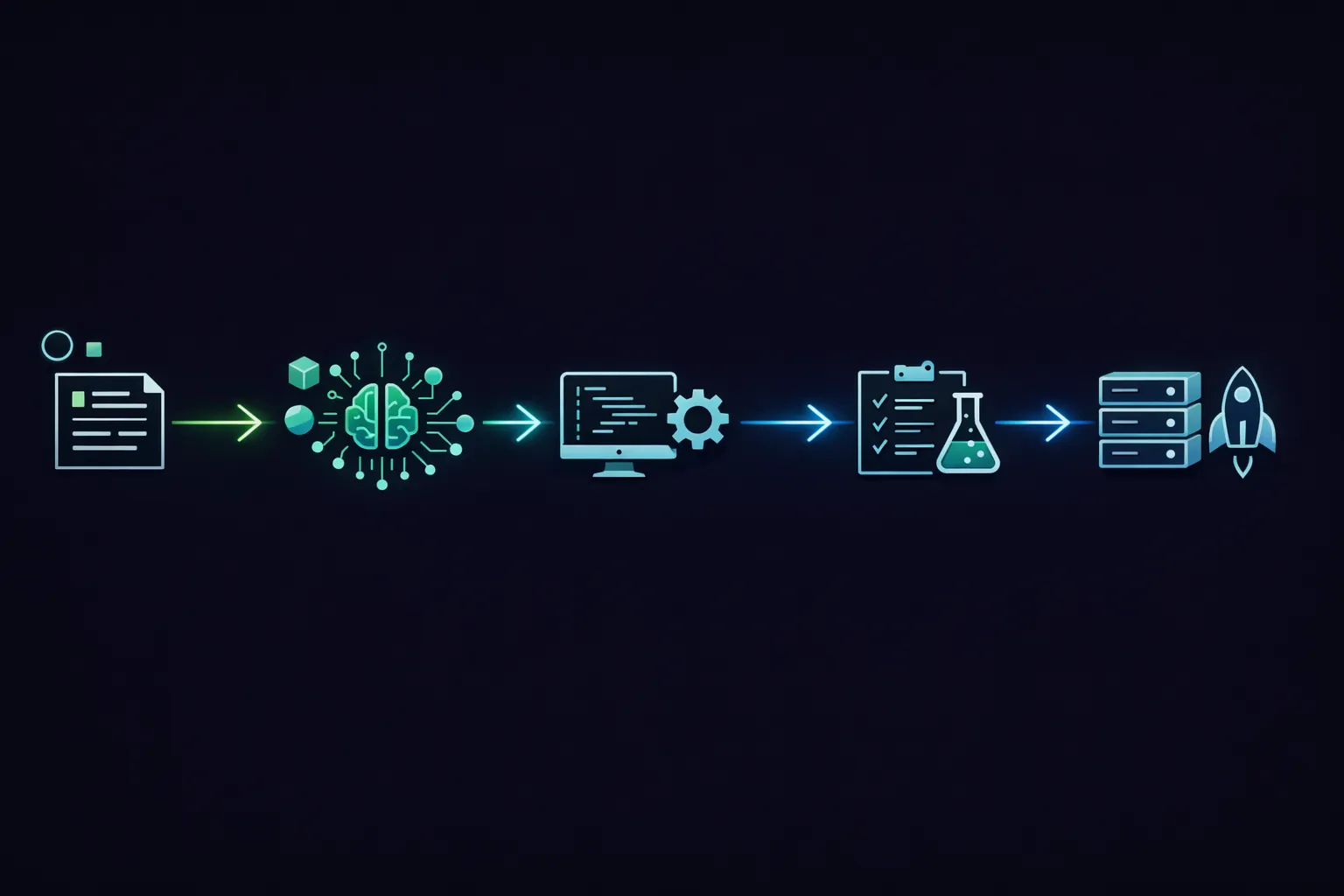
The third phase — and this is where we are now — is agent mode. The AI agent receives a task (“Implement user management with email verification”), plans the implementation, creates the necessary files, writes the code, runs tests, corrects errors, and presents the result. The human reviews and provides feedback, and the agent iterates.
I experience this third phase daily in my work with Atoo Studio. And I will say honestly: it changes everything.
What Changes for Developers
The biggest fear I hear in conversations with other developers is: “Does this make me obsolete?” My answer is a clear no — but it changes what is expected of us.
From Implementation to Architecture
In a world where an AI agent can scaffold a complete REST API in minutes, the ability to write clean endpoints becomes less valuable. What gains value instead: the ability to design a system that scales, is maintainable, and makes the right trade-offs.
I spend significantly less time today writing boilerplate code. But I spend more time thinking about architecture, documenting decisions, and reviewing the work of AI agents. And this review is more demanding than many think. You need to not just read the code but understand whether it makes sense in the overall context of the system.
Prompt Engineering as a Core Competency
A skill I would have dismissed as a marketing term two years ago has become one of my most important competencies: the ability to precisely tell an AI agent what I want.
This is surprisingly hard. It requires technical understanding (you need to know what is possible), communication skill (you need to be precise and unambiguous), and empathy for the machine (you need to understand how the model “thinks” and where ambiguities exist).
In my work on Atoo Studio, I have found that the best prompts are not the longest ones but the ones that provide the right context. A good prompt tells the agent not just what to do but also why, and provides the necessary constraints.
Code Review Becomes More Critical
In traditional development, I write code and have it reviewed. In agentic development, the agent writes code and I review. That sounds like the same process in reverse order, but it is fundamentally different.
When I review my own code, I know the intention behind every line. When I review an agent’s code, I have to reconstruct the intention. I need to check whether the agent correctly understood my requirements, whether it chose sensible abstractions, whether there are security issues, whether the code is performant.
This requires deep technical understanding. Paradoxically, Agentic Development makes it more important, not less important, to be a good developer.
The Technical Infrastructure
Agentic Development places new demands on development infrastructure. An agent needs more than a text editor. It needs an environment where it can work autonomously.
Sandbox Environments
One of the most important building blocks is a secure sandbox environment. When an AI agent can execute commands, you need to ensure it does not cause damage. Container-based workspaces, like the ones we use in Atoo Studio, are one solution: the agent works in an isolated container, and even if something goes wrong, the host system is not affected.
Tool Integration
An agent needs access to tools: Git, package managers, build systems, linting tools, test frameworks. But it needs this access in a structured way. Not through a raw terminal but through APIs that allow it to understand results and react to them.
The Model Context Protocol (MCP) is an approach heading in this direction. It standardizes how AI agents communicate with external tools. In Atoo Studio, we use MCP as one of the core protocols for agent integration.
Visual Feedback
An aspect that is often overlooked: agents need visual feedback. When an agent builds a React component, it needs to be able to see what it looks like. When it debugs a CSS problem, it needs to see the rendered output. That is one of the reasons I built an integrated browser into Atoo Studio — the agent gets visual context, not just text.
Where Agentic Development Stands Today
I want to be honest: we are not at the finish line yet. Current AI agents are impressive, but they have limitations. They sometimes lose context during long tasks. They make mistakes that an experienced developer would catch immediately. They struggle with complex, domain-specific requirements.
But the progress is rapid. A year ago, an AI agent could write a simple function. Today, it can implement an entire feature, including tests and documentation. The direction is clear.
What I Expect
My prediction for the next three years:
By the end of 2026, most professional developers will work with AI agents daily. Not as a novelty but as an integral part of their workflow.
By 2027, we will see the first products built primarily by AI agents, with human oversight and architecture.
By 2028, the distinction between “written by humans” and “written by AI” will be as irrelevant as the question of whether code was written in Vim or VS Code.
This does not mean developers will become obsolete. It means our role will change. We will become architects, reviewers, quality guardians. And the best developers will be those who can collaborate most effectively with AI agents.
Conclusion
Agentic Development is not a future vision — it is happening now. And I am convinced that it is the biggest change in software development since the rise of the internet. Not because AI programs better than humans, but because it allows us to work at a higher level of abstraction.
My advice to every developer: engage with this now. Not tomorrow, not next year. Now. Learn to work with AI agents. Understand their strengths and weaknesses. Rebuild your workflows. The developers who do this will be ahead in three years.